
Pastoralists live in a vast range of different environments – from the frozen tundra of the Artic to the burning deserts of Africa and Asia, from the mountains of Europe to the Altiplano in the Andes, and from the plains of North America to the rice paddies of Southeast Asia. They keep animals suited to their environment. The most widespread species are cattle, goats and sheep. Bactrian camels and dromedaries are suited to hot, arid areas, and alpaca and llamas are found in the Andes of South America. Reindeer thrive in the Arctic, and yaks in the Himalayas and plateaux of central Asia. Pastoralists in some areas herd ducks, geese, pigs and buffaloes. Horses, donkeys, llamas and camels traditionally serve as pack animals, and dogs both herd flocks and guard them.

Many pastoralists keep more than one species of animal: that gives them both flexibility and security in an uncertain environment. Some pastoralists are nomadic, while others are semi-nomadic (returning each year to a permanent home base), transhumant (moving between two or more fixed locations) or sedentary (staying in one place all year round, and herding their animals nearby). Many pastoralists combine various management approaches, or may switch between them, depending on the weather and other considerations. Agropastoralists grow crops as well as keep livestock. Ranchers are commercially oriented and often have exclusive rights to the land they use. Some beekeepers travel very long distances with their beehives to pollinate crops, harvest nectar and make honey. Many pastoralists have other sources of livelihood apart from livestock: trade, handicrafts, hunting, and part-time or seasonal work.
LPP’s maps on pastoralism
Our series of maps shows the huge diversity of pastoralism around the world.
- World map of pastoralists: information on 1000+ groups of pastoralists worldwide.
- Threats to pastoralism map: our newest initiative: a map of threats that restrict herders’ access land and water, or that limit their mobility.
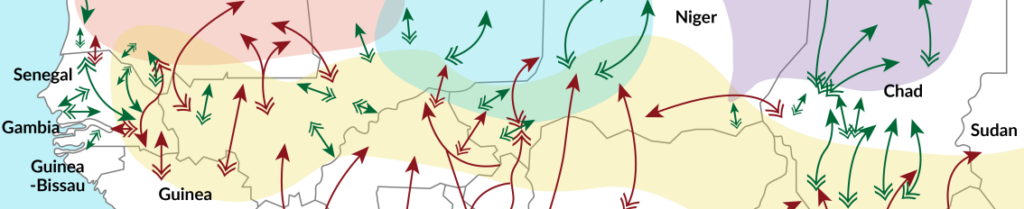
- World map of pastoralists’ migration routes: over 750 maps of pastoralists’ migration patterns and grazing areas.
- Videos on pastoralism: 300+ videos on a world map.
- World map of camelids: information on 220+ groups who keep camelids, prepared for the International Year of Camelids 2024.
- World map of yaks: information on 70 groups of yak herders and organizations involved in yak research, development and support.
- Weidehaltung und Hirtentum in Deutschland (Grazing and herding in Germany): prepared for the Bündnis für Weidelandschaften und Hirtentum, the German support group for the International Year for Rangelands and Pastoralism (in German).
Please contact us with comments, suggestions and corrections.